What is a kamishibai?
In the reading tips of The Adventures of Littie parents and teachers read that the story is also suitable for the kamishibai. But what exactly is that, and how do you use it?
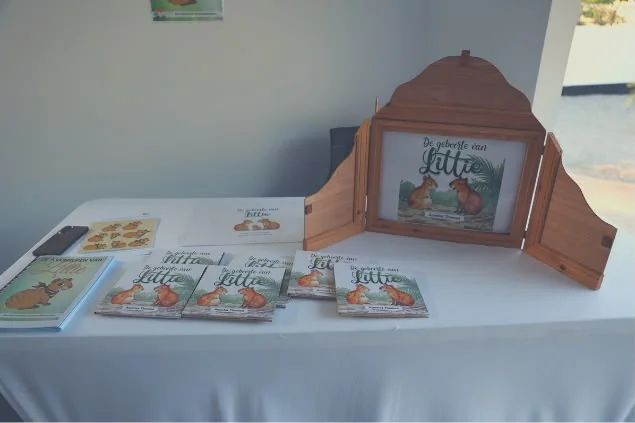
A small paper theater
Kamishibai is a storytelling form from Japan. The word roughly means 'paper stage'. The storyteller uses large pictures, the story pictures, which are placed in order in a wooden story box with doors: the butai. The plates are usually as large as A3.
The text is on the back of the plates. On the back of plate 1 is the text that belongs to plate 2, and so on. The narrator stands next to the cupboard and reads the text while the children look at the picture.
Why work with a kamishibai?
- All children in the group can see the picture clearly.
- Opening the doors and moving the plates makes the story exciting.
- Image and language together strengthen vocabulary and story comprehension.
- Children start talking about what they see and what could happen.
This is how you use a kamishibai
- Prepare yourself. Read the story a few times and check the order of the pictures.
- Place the cabinet properly. Place it at the children's eye level and stand next to it.
- Start slowly. Wait until it is quiet and open the doors slowly.
- Slide the plates slowly. Let the children look first and then read the text.
- Use silence. A short break for a new record makes it extra exciting.
- Involve the group. Ask short questions about what the children see.
- Talk it over. Afterwards, ask which moment they liked best.
More background information can be found at International Kamishibai Association of Japan.